
Highlights
- Learn how to distinguish safe survivors from infected ones using both visual cues and inspection tools before it is too late.
- Master when to quarantine versus liquidate, avoiding costly mistakes caused by false alarms, such as sunburn or stress symptoms.
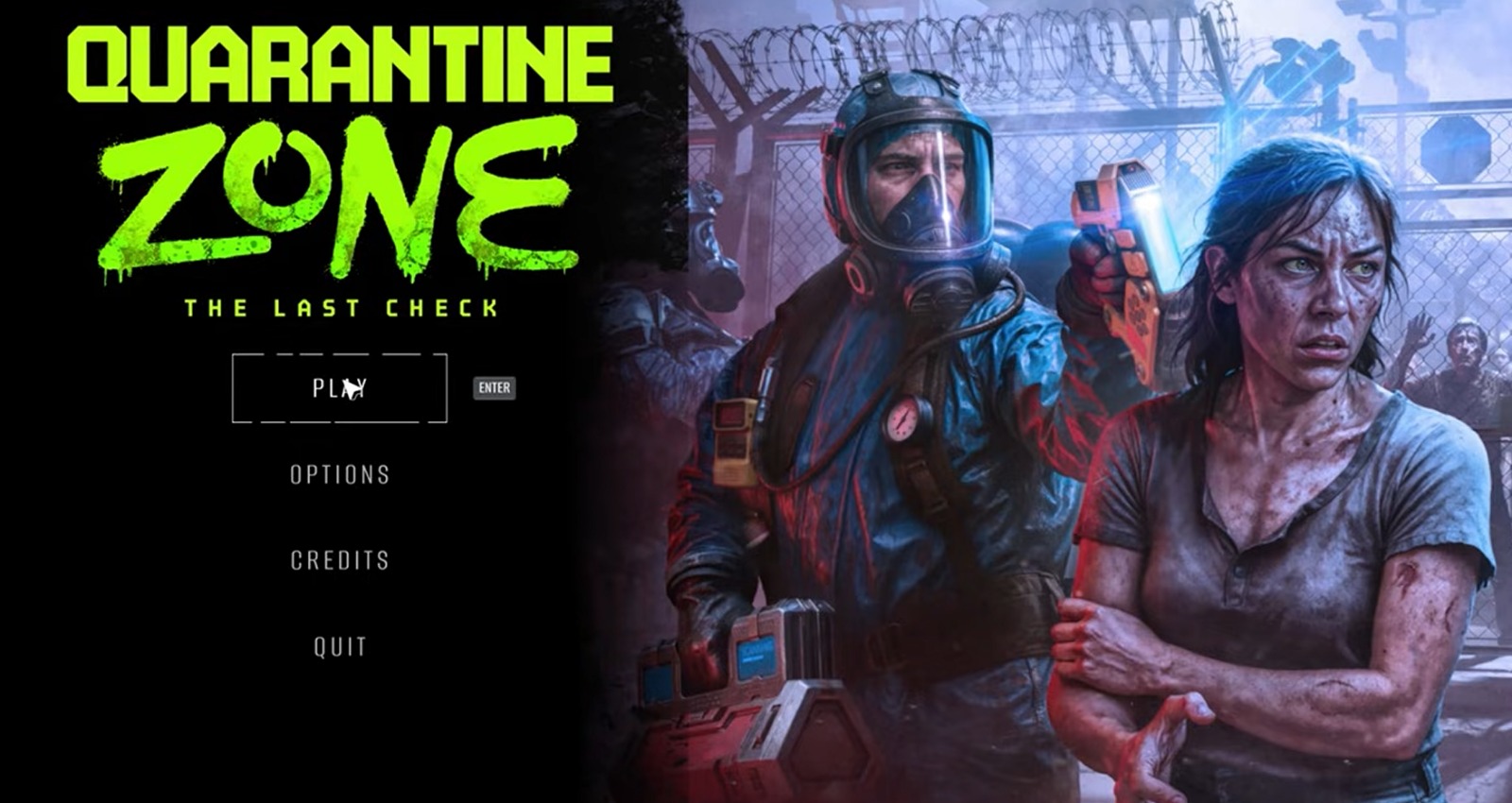
You are in the middle of a Zombie Apocalypse. You are working at a checkpoint as its gatekeeper, tasked with separating the healthy from the infected. As part of the evaluation process, every survivor will need to receive one of three outcomes: Safe, Quarantine, Liquidate. To arrive at the appropriate conclusion, you will need to closely observe the survivor and properly utilize available equipment.
Visual Inspection
Your first step in evaluating the survivor should be a comprehensive visual inspection. One of the first clues to look for is the survivor’s skin condition.
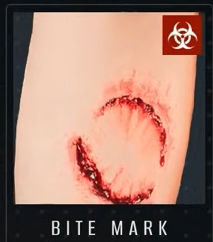
Bite marks: They are the most obvious sign of infection. If you find any bite marks, send them to liquefaction immediately. Survivors will make excuses for the bite mark, saying a dog bit them, and the bite mark might be hidden under clothes. Use your scanner with UV light to reveal hidden wounds.
- Skin conditions: While managing the checkpoint, various types of skin conditions will be found on the survivors. While Freckles and Red skin(looks like sunburn) are safe, if you see a survivor with Green skin, they are infected and need to be liquidated. Whereas, if you find survivors with Pale skin or a skin rash, you should put them in Quarantine and check if other symptoms develop, and then decide their fate.

- Eye Indicators: Survivors with yellow eyes are safe and can be let in. If they have Conjunctivitis, you should put them in Quarantine, and if you see any survivors with Red eyes or eye pus,s then they are infected, and you should deal with them swiftly.
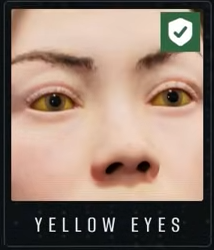
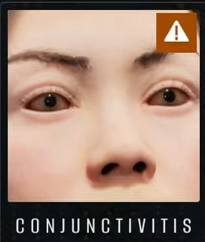
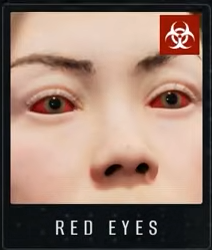
- Nose Spillage: Many survivors may show up at the checkpost with a bloody nose. They are usually safe. But, if you find someone with Nose pus, they are infected and are to be liquidated.
Inspection Tools
Once the initial visual check is complete, confirm or identify additional symptoms using tools. All survivors must be scanned using a Scanner with UV Light, regardless of their appearance; this will identify hidden bite marks covered by clothes or bandages. If a bite is discovered, the survivor qualifies for liquidation.
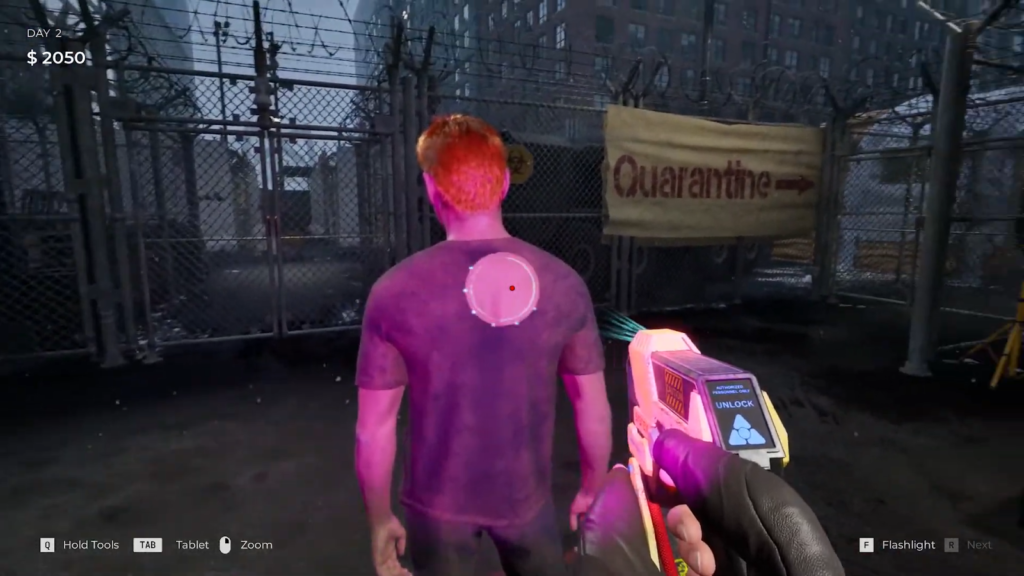
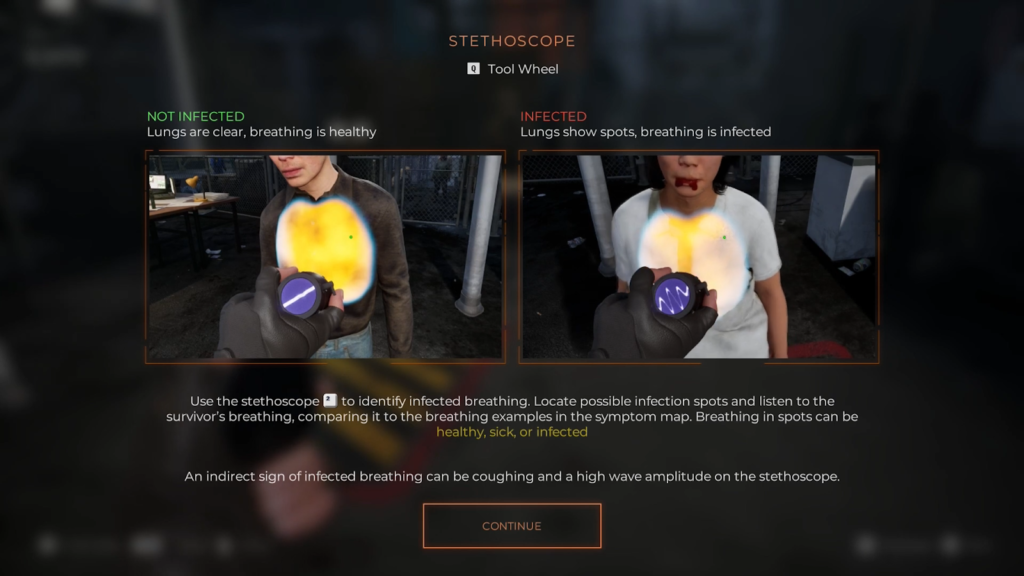
The Stethoscope is the instrument that should be used to evaluate the respiratory system. If a person is breathing normally, they are considered safe; however, if the breathing pattern is irregular, then quarantine is warranted. The stethoscope also provides a diagnosis of “virus breathing,” which is an indication of infection in the lungs and therefore, liquidation must occur.
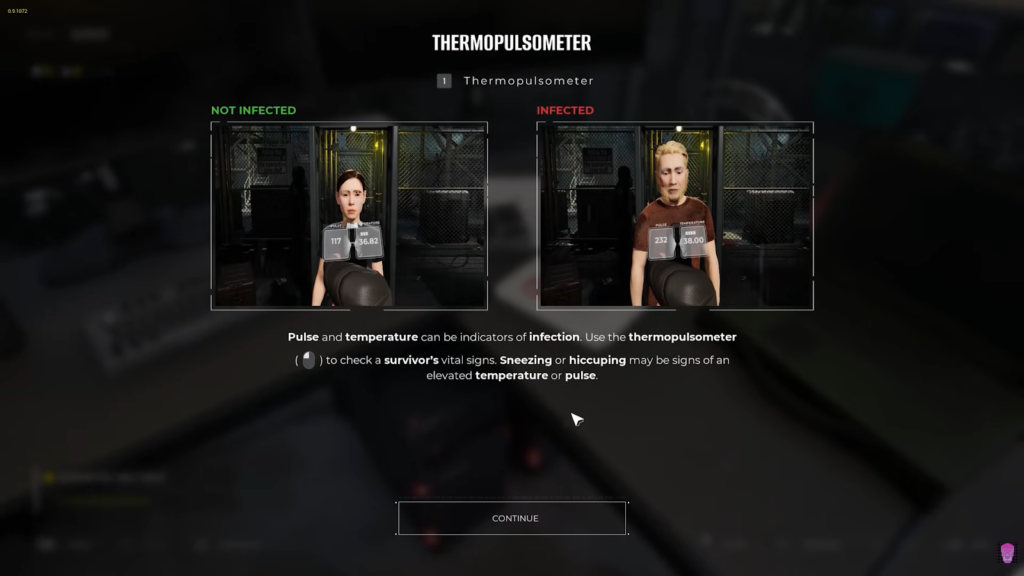
The Thermo-Pulse Meter will provide temperature and heart rate readings; a normal temperature and heart rate indicate that a person is safe to be with other survivors; however, an increased temperature or elevated heart rate indicates that a survivor needs to be quarantined until such time as either their temperature returns to normal or their heart rate returns to normal. Extreme temperature and heart rate values are strong indicators that the survivor is infected.
The Syringe Scanner is the best tool to utilize when determining the survivor’s status for healthy or infected. Use of the syringe scanner should only occur when there are discrepancies between visual inspection (i.e; pale appearance and normal breaths) and any other symptom. Therefore, manage resources properly to allow the syringe scanner to be available for situations of critical importance.
Decision Matrix
VISUAL SYMPTOMS
| Symptom Name | Description/Notes | Status |
| Yellow Eyes | Jaundice. Not a sign of the virus. | SAFE |
| Red Eyes | Crimson glowing pupils. Advanced infection. | INFECTED |
| Conjunctivitis | Pink/irritated eyes. Potential early symptom. | QUARANTINE |
| Freckles | Natural skin pigmentation. | SAFE |
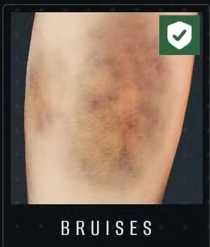
| Bruises | Minor injuries. Not viral. | SAFE |
| Skin Rash | Red, irritated skin patches. Suspicious. | QUARANTINE |
| Pale Skin | Loss of color. Sign of sickness or shock. | QUARANTINE |
| Green Skin | Necrotic tint. Transformation imminent. | INFECTED |
| Bite Mark | Distinct teeth marks. | INFECTED |
| Necrosis | Rotting black flesh. | INFECTED |
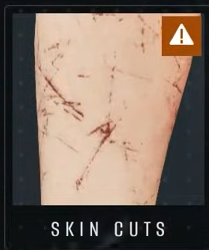
| Cuts / Wounds | Open scratches (non-bite). Risk of infection. | QUARANTINE |
VITALS & INTERNAL
| Symptom Name | Reading / Observation | Status |
| Elevated Temp | 37°C – 41°C (98.6°F – 105.8°F) | QUARANTINE |
| Extreme Fever | > 41°C (> 105.8°F) | INFECTED |
| Elevated Pulse | 120 – 180 BPM | QUARANTINE |
| Extreme Pulse | > 180 BPM | INFECTED |
| Irregular Breath | Uneven breathing rhythm (Stethoscope). | QUARANTINE |
| Virus Breath | Wet, rattling “fluid” sound (Stethoscope). | INFECTED |
| Hyper Reflex | Aggressive twitch/attack reaction (Hammer). | QUARANTINE |
| Cross Reflex | Hit left knee -> Right leg kicks (Hammer). | INFECTED |
LUNGS / X-RAY
| Symptom Name | Description | Status |
| Clear Lungs | No obstruction. | SAFE |
| Dark Spots | Shadow on lungs (Pneumonia/infection). | QUARANTINE |
| Fluid Buildup | Significant opacity (Advanced virus). | INFECTED |
Frequently Asked Questions (FAQs)
- What is the main objective at the checkpoint?
- Your goal is to accurately classify survivors as Safe, Quarantine, or Liquidate while managing limited resources and preventing infected individuals from entering the safe zone.
- Is visual inspection enough to identify infected survivors?
- No. Visual inspection is only the first step. Some infections are hidden and can only be detected using tools such as the UV scanner or stethoscope.
- Should I use the syringe scanner on every survivor?
- No. The syringe scanner consumes valuable resources and should only be used when other signs conflict or when a definitive result is necessary.
- Can a survivor appear healthy but still be infected?
- Yes. Some infected survivors show minimal outward symptoms early on, which is why tool-assisted inspection is essential.
