

Farming in RuneScape: Dragon Wilds is not just a matter of putting seeds in the ground and hoping they grow. You need to be aware of the different kinds of farming plots, how to consistently water your crops, knowing which types of compost are useful on your crops, and how to prevent crop diseases. This farming guide will explain how to unlock farming and give you the most efficient tips to layout your farm. After reading this, you will be able to start building a successful farm right away.
Unlocking Farming and Basic Tools

The first time you interact with a crafting table, you will unlock farming automatically. You will gain access to basic farming tools once the skill becomes available. These include:
- Wooden Spade
- Compost Bucket
- Watering Can
Each of these items is easy and inexpensive in terms of crafting. You can create these with only two items: ash logs and coarse threads. Therefore, nearly every player already has enough material stashed away to build them right away.
As players progress, they will gain access to higher tier versions like iron tools, which have higher capacities for carrying both water or compost, and therefore allow players to be significantly more efficient. However, this type of tool is not required until later stages of the game.
Filling up of the watering cans could be achieved at all available water sources and the water does not need to be purified. After filling the watering can, players can use water barrels for storage, which become available at higher farming levels. The water barrel acts as long-term storage. You can transfer water from your watering can into the barrel and refill it later when needed.
Farming Plots and Crop Compatibility
Farming plots are found in the build menu under the farming category. There are two types available:
- Ash farming plots
- Oak farming plots
Certain plot types are more suited to the cultivation of crops native to particular geographical locations. Plants native to Brynmoor grow more efficiently in one plot type, while crops from Ghornfell perform better in the other. This information is clearly identified within the game, so it’s advisable to check the plot description before planting seeds. Remember, that using the wrong plot type does not prevent plant growth; however, plants will grow more efficiently when grown in the right type of plot.
Farming Progression and Unlocks

Not everything related to farming is available immediately. The skill gradually opens up as you gain levels:
- Level 3: Plant Cure
- Level 6: Rain Catcher
- Level 10: Compost and compost bucket
- Level 15: Uproot ability
- Level 20: Farming trees
- Level 24: Water barrel
Early farming relies mostly on rainfall and manual watering, but things become much easier once compost and automated watering options are unlocked.
Plant Disease and Plant Cure

As the seasons change and the crops mature, they can experience a period of decline every 1 to 2 days. The likelihood of disease can vary depending upon the amount of care that is provided to them through regular watering and adding of compost.
At level 3 you will unlock the option to craft a Plant Cure, which provides a way to heal your plants that have been affected. To craft a Plant Cure, you must use a Cooking Range and select the miscellaneous category.
- Weeds
- Animal bones
- Clean water
It’s a good idea to create more of these items to make sure that you have them on hand. You can restore a crop that has been infected by diseased plants by interacting with them and pressing “E.” Diseased plants won’t die, but they will cease to grow properly. Most diseased crops can be cured before they completely die, so you should regularly check your crops to make sure you are taking care of them.
Rain Catcher and Compost Bin
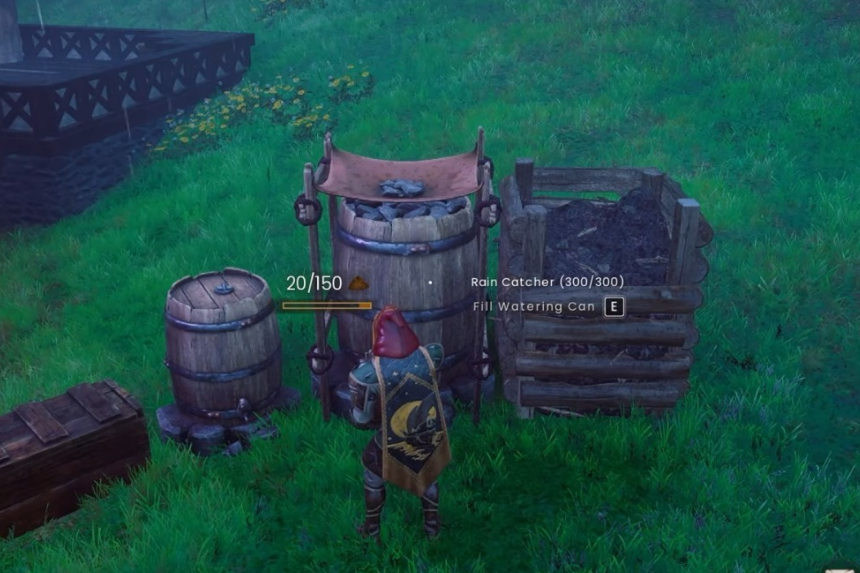
The rain catcher fills itself automatically whenever it rains and can be used to refill watering cans. It doesn’t require manual interaction beyond collecting the stored water, and it fills fairly quickly during storms. Until better watering options unlock, rain catchers are a reliable way to reduce manual refilling.
The compost bin plays a major role in improving farming efficiency. Compost speeds up growth and increases crop yield when applied to plots. A wide range of items can be turned into compost, including:
- Farmed crops (such as pumpkins or cabbage)
- Plants and meat
- Cooked or burned food
- Weeds
Weeds are less common since they only appear when empty plots grow over and need to be cleared with a spade. Compost is produced quickly, and once ready, it can be spread directly onto farming plots.
Farm Setup and Layout
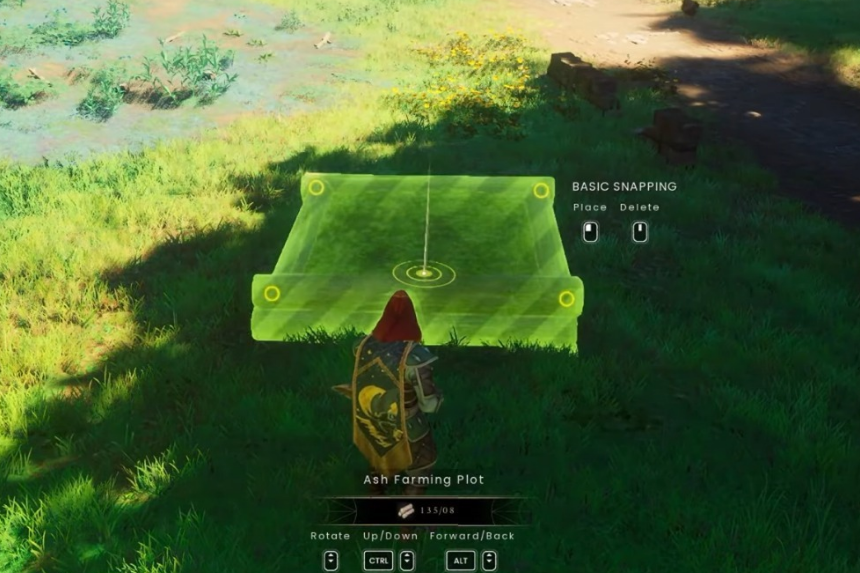
How you place your plots matters more than it seems. When building farming plots, lowering them close to ground level is recommended. Raised plots may look cleaner visually, but they often require jumping to access, which becomes frustrating when managing multiple plots. Lowering them slightly avoids movement issues without causing clipping.
The most effective farm layout is two plots wide and four plots long. This size works perfectly with the Humidify ability, which creates a raincloud to water crops. When standing close to the first plot, the raincloud will water the entire 2×4 area in a single use. Larger layouts cause the raincloud to stop early, leaving some crops dry. Keeping farms within this size ensures consistent watering without wasted resources.
Humidify Ability
Humidify creates a raincloud that waters nearby crops automatically. To use it, your water bucket must contain at least 50 units of water, either clean or dirty. Once activated, the raincloud moves across the plots until it reaches its maximum range, which is why layout size is so important.
