

When it comes to choosing games to play with your four and five year old children, the result of your selection may be a game-changer in family time. Children between the ages of 4 and 5 tend to be drawn to colorful visuals, movement, and simple challenges that create excitement without being overwhelming. This article highlights a variety of age-appropriate and engaging board games that encourage learning, teamwork, and laughter while keeping playtime engaging for everyone involved.
The Best Board Games for Kids
Here is a detailed list of the 15 best board games you can buy for 4 and 5 year olds:
My First Stone Age
| Specifications | |
| Players | 2 – 4 |
| Type | Children’s |
| Age | 5+ |
| Playing Time | 15 Minutes |
| Mechanism | Memory and Set Collection |
| Complexity | Light |
| Ratings | 4.4 |
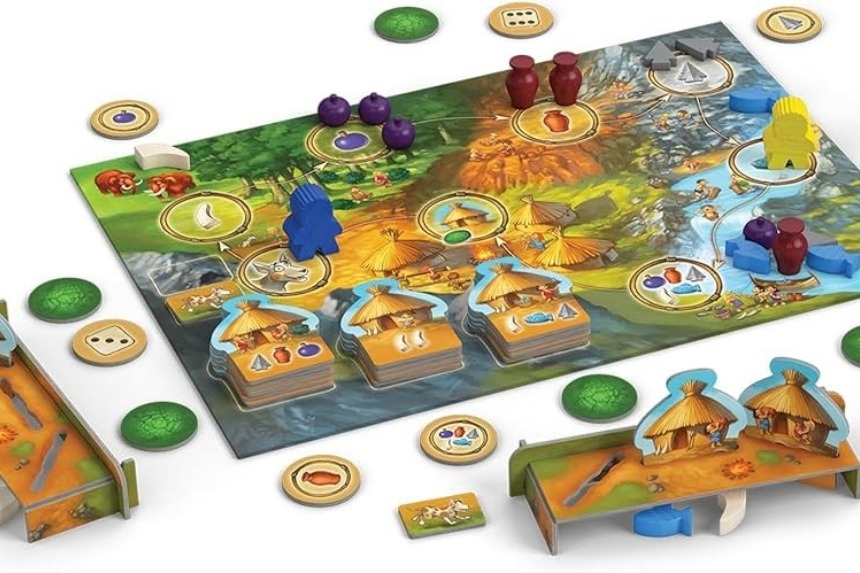
Features: My First Stone Age is a board game for ages 5 and above. The game allows younger players to get started with some of the elements of the classic Stone Age board game. Players take resources, build huts and move their meeples through a village by exploring forest tokens. Players also have the support of Guff, a friendly dog, who brings them all the resources they need.
In the game, each player needs to plan their route through the village as fast as possible and try to remember where everything is located. In the end, the person who builds three huts first is the winner.
Why Choose It: The game includes simple mechanics, collecting sets, and memory challenges while teaching about strategy and decision-making skills. It has received a number of awards including the Kinderspiel des Jahres 2016 award and the Gra Roku 2017 Children’s Game of the Year award.
Gobblet Gobblers
| Specifications | |
| Players | 2 |
| Type | Abstract, Children’s |
| Age | 5+ |
| Playing Time | 5 Minutes |
| Mechanism | Memory |
| Complexity | Light |
| Ratings | 4.7 |
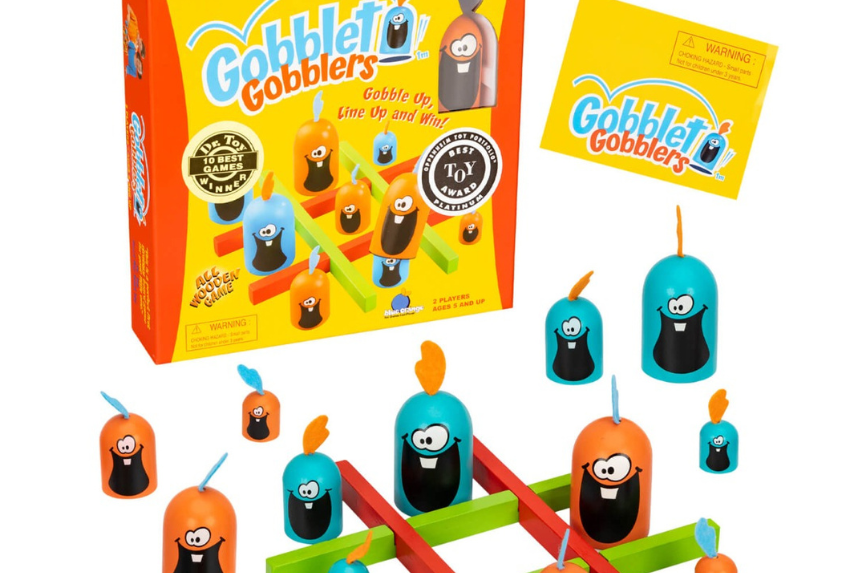
Features: Gobblet Gobblers is a light version of Gobblet, played on a 3×3 board with fewer pieces. Players attempt to align three pieces in a row horizontally, vertically, or diagonally by placing a piece from off the board into a square or by moving a piece already on the board into an adjacent empty square. Pieces can be stacked, with larger pieces covering smaller ones.
Why Choose It: Memory plays a huge role here as players try to remember which colors are hidden underneath. The game promotes planning, concentration, and strategic thinking. A player wins when three like-colored pieces form a row, though uncovering an opponent’s piece may allow the game to continue if it can still be blocked.
Outfoxed
| Specifications | |
| Players | 2 – 4 |
| Type | Children’s |
| Age | 5+ |
| Playing Time | 20 Minutes |
| Mechanism | Cooperative Game, Deduction, Dice Rolling, Die Icon Resolution, Grid Movement |
| Complexity | Medium Light |
| Ratings | 4.8 |
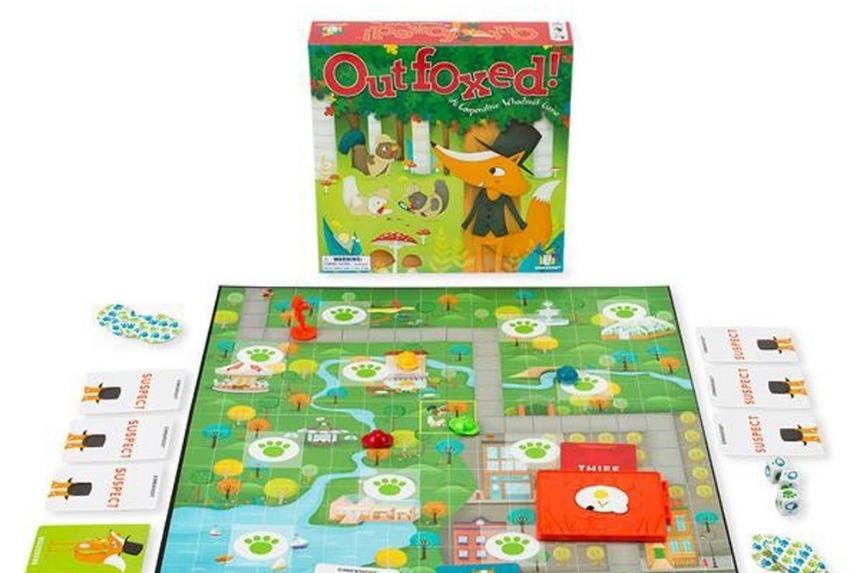
Features: In Outfoxed, players cooperate to unravel the secret of the missing pie from Mrs. Plumpert’s cottage. During their turn, players continue to search for clues while using their unique devices to scan the evidence and cross off the possible culprits. When it’s their turn to play again, players will continue to gather information and eliminate suspects until they pinpoint the guilty fox, who is about to escape from the scene. Players will need to use teamwork and quick thinking, so they can work together to catch the fox before it runs away!
Why Choose It: The game features simple gameplay mechanics that are great for teaching young children to work together and cooperate. Outfoxed has received numerous accolades within the gaming community, including awards such as: Dětská hra roku 2022, As d’Or – Jeu de l’Année Enfant 2018, and Kinderspiel des Jahres 2017 nominee.
Candy Land
| Specifications | |
| Players | 2 – 4 |
| Type | Children’s |
| Age | 3+ |
| Playing Time | 30 Minutes |
| Mechanism | Roll/Spin & Move, Track Movement |
| Complexity | Light |
| Ratings | 4.7 |
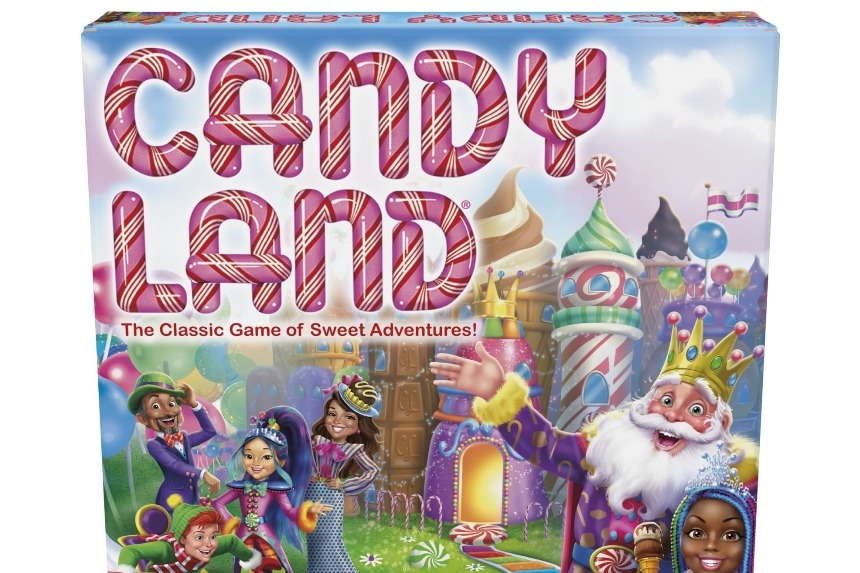
Features: Candy Land is a classic board game, originally designed in the early 1940s by Eleanor Abbott for the entertainment of children and was first published in 1949 by Milton Bradley.
In this game, players move their characters on a rainbow-colored track in order to reach Candy Castle and find King Kandy, overcoming various obstacles on the way, such as Molasses Swamp. The movements are determined by drawing cards that match the colors on the track; some of the cards send players forward or backward to certain locations.
Why Choose It: This game teaches color recognition, turn-taking, and how to follow rules. In later editions of the game, “stuck” dots had been substituted with licorice spaces, and the final square was updated to a Rainbow Square. The board and story introduce colorful and candy-filled adventures suitable for young players.
Dragon’s Breath
| Specifications | |
| Players | 2 – 4 |
| Type | Children’s |
| Age | 5+ |
| Playing Time | 15 – 20 Minutes |
| Mechanism | Physical Removal, Set Collection |
| Complexity | Light |
| Ratings | 4.6 |
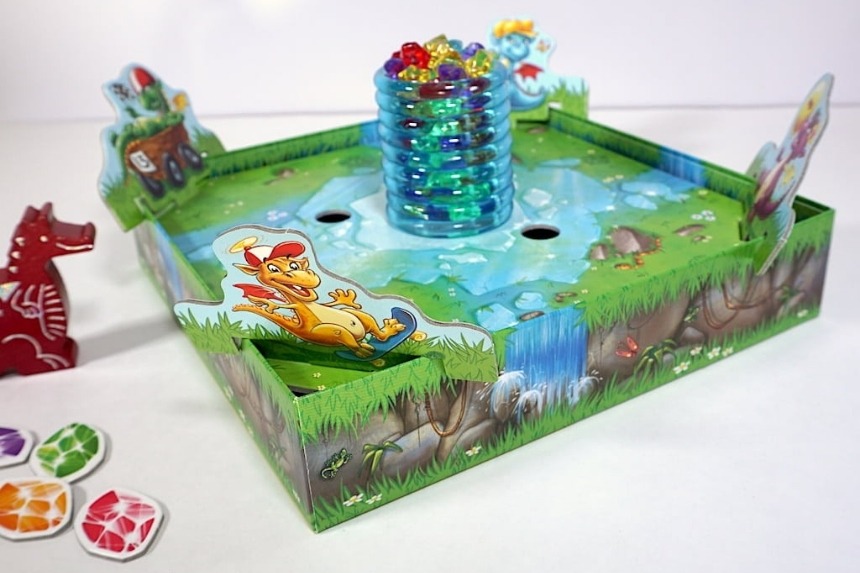
Features: Dragon’s Breath is a children’s board game where players help the dragon children Mira, Feo, Luna, and Diego retrieve sparkling stones trapped inside a column of ice. The ice is too heavy to move, so players rely on the dragon dad’s fire that will melt it and set the stones free.
On their turn, a player selects a sparkling stone tile, lifts the top ice ring, and picks up all the stones that fall off the color of their tile. Each player aims to get the most stones at the end of the game.
Why Choose It: The game amalgamates simple mechanics with suspense and thrill, encouraging keen planning and turn-taking. It has been widely recognized and won the Boardgames Australia Best Children’s Game 2019 and Kinderspiel des Jahres 2018, among other nominations.
Labyrinth
| Specifications | |
| Players | 2 – 4 |
| Type | Family |
| Age | 5+ |
| Playing Time | 20 Minutes |
| Mechanism | Map Deformation, Modular Board, Network & Route Building, Slide/Push, Square Grid |
| Complexity | Medium Light |
| Ratings | 4.8 |
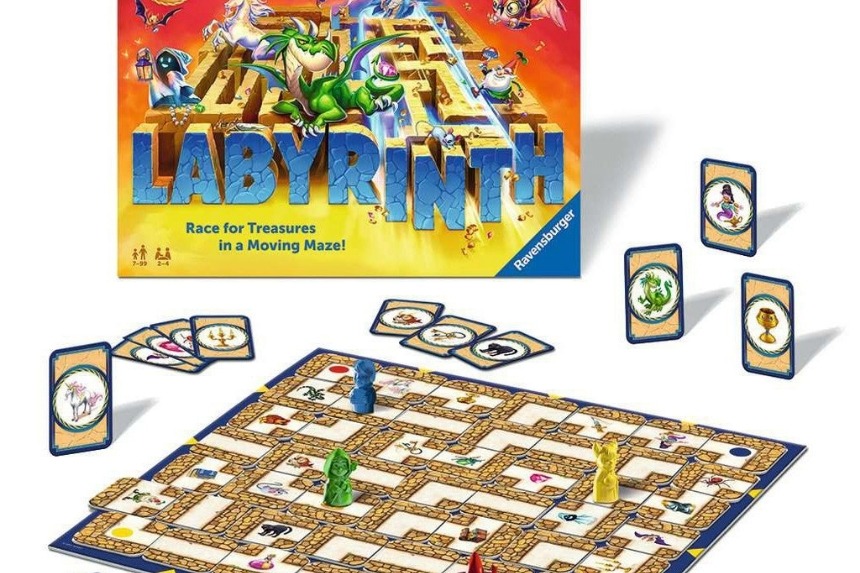
Features: The aim of this classic children’s board game Labyrinth is to move one’s player piece through a constantly changing maze, collecting treasures and returning to one’s home space.
The board consists of fixed tiles; the remainder moves in and out of the rows so that there is one additional tile in the player’s hand at any given time. The player turns the extra tile into the maze, which displaces others and opens new paths. The objective is, of course, to be the first player to reach the treasures ahead of the opponents while following the changing labyrinth.
Why Choose It: Labyrinth stimulates problem-solving, planning, and spatial reasoning. Its simple yet captivating mechanics appeal to children and adults alike. It has received several awards, including the Parents’ Choice Classic Award 2011 and Årets Spel Best Family Game 1988.
Ticket to Ride: First Journey
| Specifications | |
| Players | 2 – 4 |
| Type | Children’s |
| Age | 5+ |
| Playing Time | 15 – 30 Minutes |
| Mechanism | Hand Management, Set Collection, Network and Route Building |
| Complexity | Medium Light |
| Ratings | 4.8 |
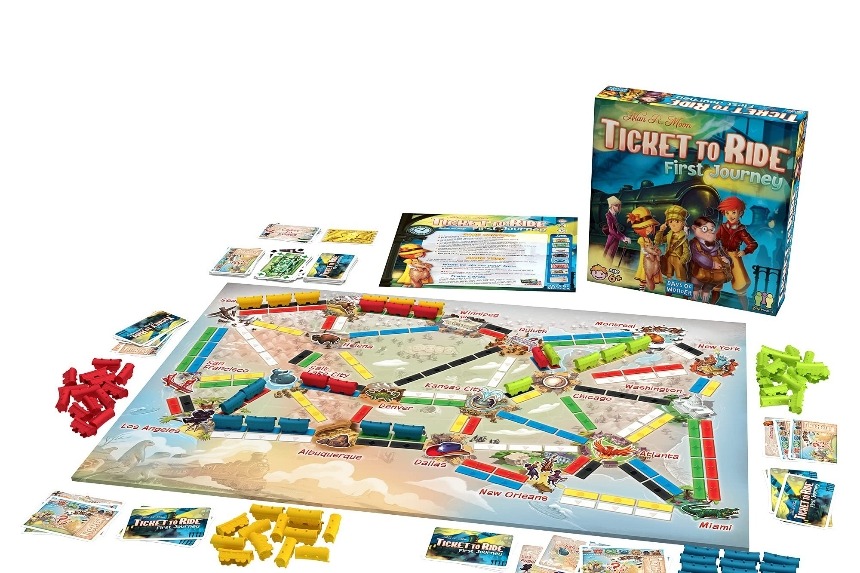
Features: Ticket to Ride: First Journey is the simplified version of the Ticket to Ride series for younger players. Players look at a board featuring a map of the United States with cities connected by colored paths. Each player selects four colored train cards and two tickets showing two cities and tries to connect those two cities by claiming routes on the map with the cards.
Completed tickets score points and grant new tickets. If a player connects either coast to the other, he or she gets a Coast-to-Coast bonus ticket. The first to complete six tickets wins, or if all trains are placed, the player with the most completed tickets wins. The game has received several children’s game of the year awards.
Chutes and Ladders
| Specifications | |
| Players | 2 – 6 |
| Type | Children’s |
| Age | 3+ |
| Playing Time | 30 Minutes |
| Mechanism | Events, Race, Track Movement, Roll/Spin & Move |
| Complexity | Light |
| Ratings | 4.0 |
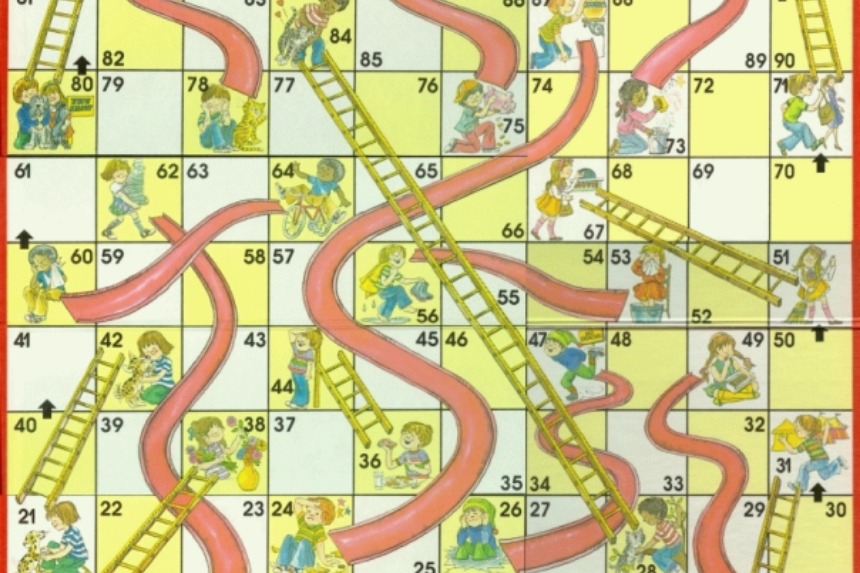
Features: Snakes and Ladders is a traditional board game, which has its origins in ancient India. It was introduced to the United Kingdom in 1892 and later commercially published in the United States by Milton Bradley in 1943 under the name Chutes and Ladders. The players move their pieces in a numbered track by climbing ladders representing positive actions and sliding down snakes that symbolize negative actions.
Why Choose It: The game visualizes the course of life where good deeds facilitate progress, while evil acts result in a setback and emphasizes simple counting, turn-taking, and understanding cause-and-effect. It remains a popular board game for children, merging luck and learning on a colored, simple basis.
Monza
| Specifications | |
| Players | 2 – 6 |
| Type | Children’s |
| Age | 5+ |
| Playing Time | 10 – 15 Minutes |
| Mechanism | Dice Rolling, Race, Track Movement, Roll/Spin & Move |
| Complexity | Light |
| Ratings | 4.7 |
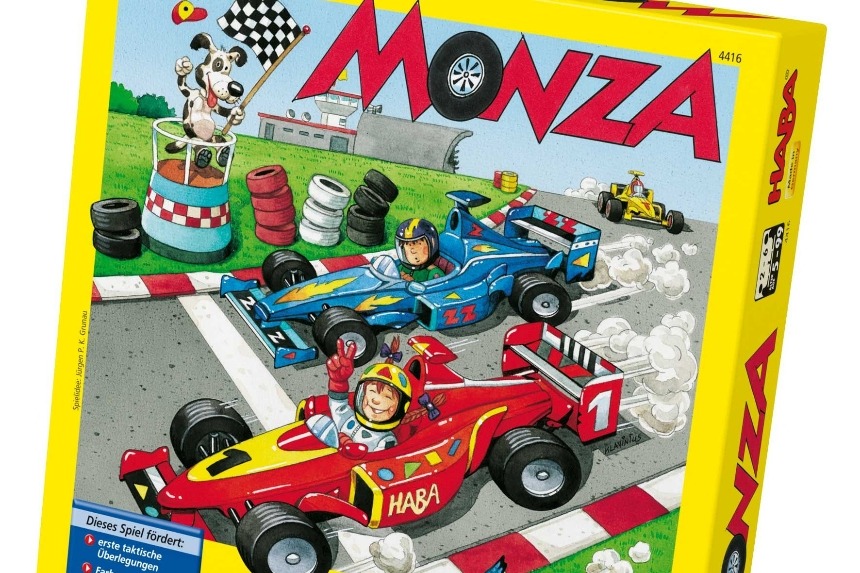
Features: Monza is a colorful car racing board game for young children. The players roll six dice and choose colors from the dice to move their cars on a three-lane race track. Every move should be chosen thoughtfully, matching dice colors to spaces directly ahead, and calls for basic planning. Dice that were used for movement are set aside one at a time until no moves remain. Players must stay within their lanes, avoid obstacle spaces, and can push other cars backward if they land on the same square.
Why Choose It: Monza supports color recognition, enhances focus, and develops early tactical thinking. It is an internationally recognized game and was nominated for the Japan Boardgame Prize.
Andor: The Family Fantasy Game
| Specifications | |
| Players | 2 – 4 |
| Type | Children’s, Family |
| Age | 5+ |
| Playing Time | 30 – 45 Minutes |
| Mechanism | Area Movement, Cooperative Game, Dice Rolling |
| Complexity | Medium Light |
| Ratings | 4.7 |
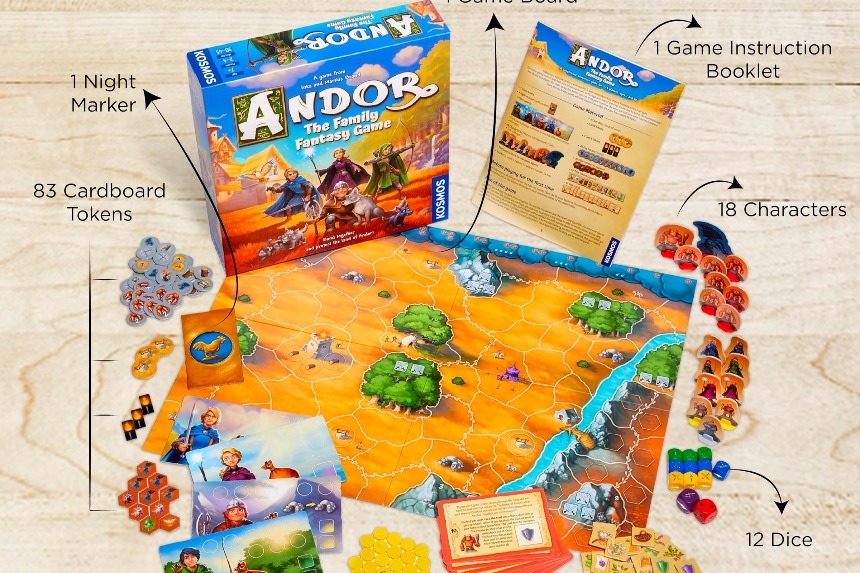
Andor: The Family Fantasy Game is widely known as Andor Junior. Players in this cooperative board game take on the role of the four heroes: magician, warrior, archer, or dwarf. They embark on a mission to save the wolf cubs that have been lost in the dwarven mine.
Before crossing the bridge leading to the mines, they have to master the tasks given by Mart, the guardian of the bridge. At the same time, a dragon approaches Castle Rietburg, so there is a time challenge. Players cooperate to achieve all goals and save the wolf cubs before the dragon reaches their location.
This one requires strategy, teamwork, and problem-solving; with each replay, new challenges will be presented. It has received accolades, including Deutscher Spiele Preis Best Children’s Game 2020 and several 2021 nominations.
Valley of the Vikings
| Specifications | |
| Players | 2 – 4 |
| Type | Children’s |
| Age | 5+ |
| Playing Time | 15 – 20 Minutes |
| Mechanism | Worker Placement, Roll/Spin & Move |
| Complexity | Medium Light |
| Ratings | 4.8 |
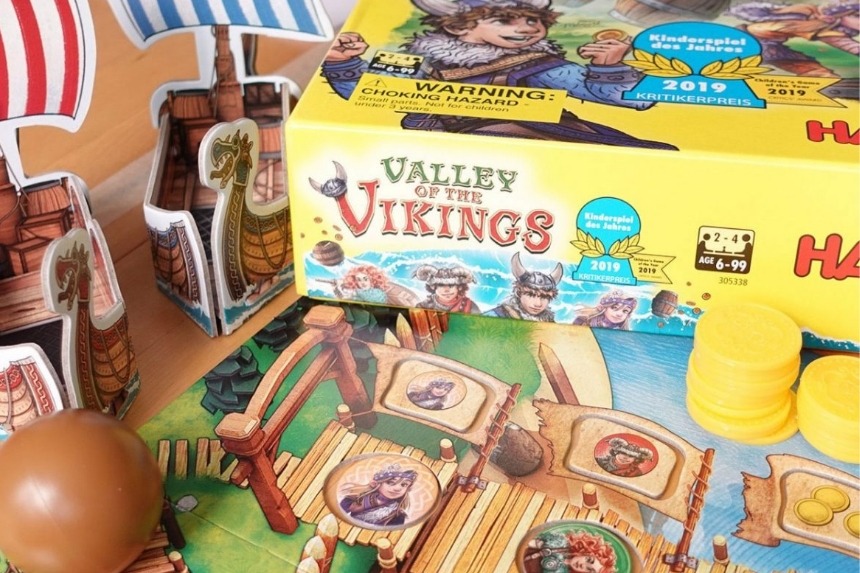
Features: Valley of the Vikings is a fun and exciting children’s board game based on a contest of barrel-bowling. Players have to roll the ball with care to knock down the right barrels while placing their Viking figures skillfully on the dock. Success requires skill, timing, and the acceptance of risk; one move too far and you see a poor Viking plunged into the water and the player leaving empty-handed.
Why Choose It: The aim of the game is to collect the most gold coins at the end. Its simple rules, playful competition, and physical dexterity make the game enjoyable for young players. Its accolades include Kinderspiel des Jahres 2019, Swiss Gamers Award for Kids, and several international nominations.
Turtle Splash
| Specifications | |
| Players | 2 – 4 |
| Type | Children’s |
| Age | 5+ |
| Playing Time | 15 – 20 Minutes |
| Mechanism | Flicking, Memory |
| Complexity | Light |
| Ratings | 4.8 |
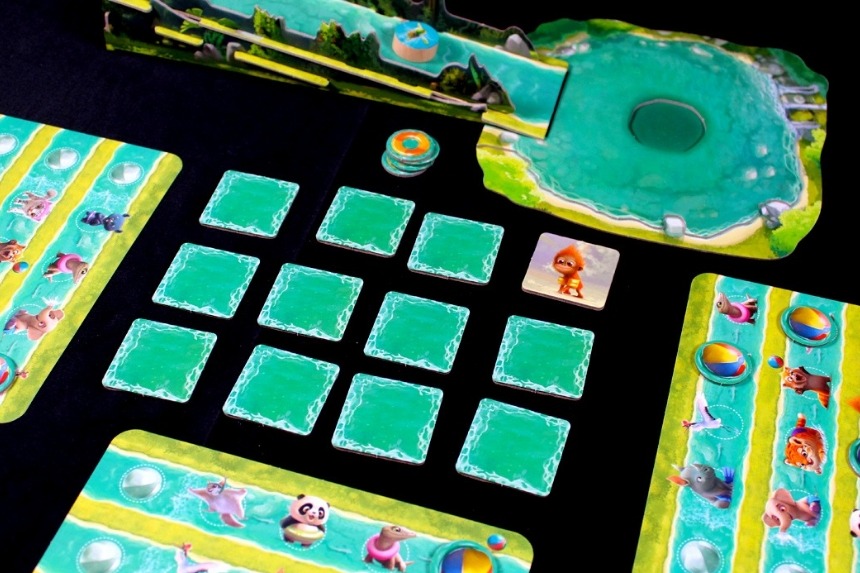
Features: Turtle Splash is a children’s board game where, with the use of a flicking action, players slide their turtle into the water and then flip animal tiles on their personal boards to advance the turtle to the lake to join the other jungle animals. Players try to find all the animals on the board before the other players.
Why Choose It: The game effectively mixes dexterity, hand-eye coordination, and memory as players plan their flicks and track the animal tiles. Its simple rules and playful theme make it ideal for young children, encouraging both physical skill and friendly competition in a colorful, engaging setting.
Hoot Owl Hoot
| Specifications | |
| Players | 2 – 4 |
| Type | Children’s |
| Age | 4+ |
| Playing Time | 15 Minutes |
| Mechanism | Cooperative Game, Pattern Recognition, Track Movement |
| Complexity | Light |
| Ratings | 4.7 |
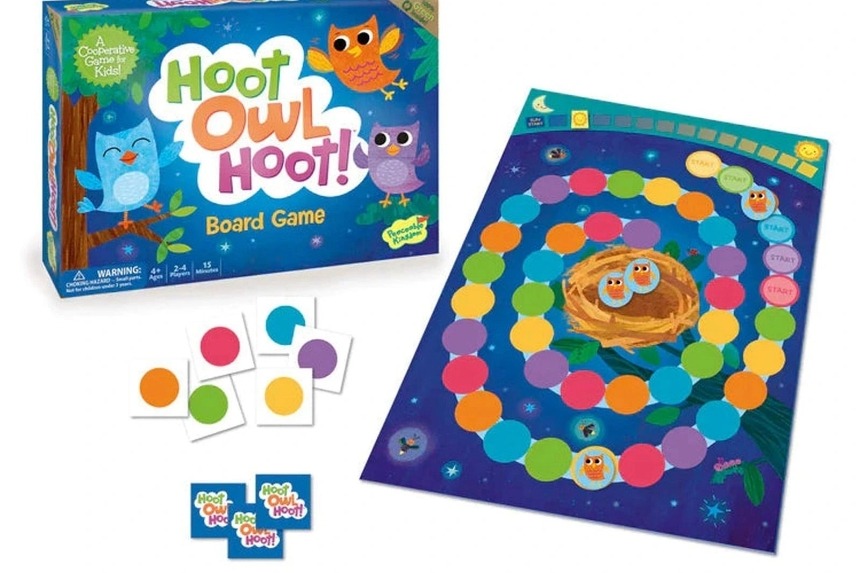
Features: In Hoot Owl Hoot!, players work together to move all the owls back to their nest before the sun rises and a new day begins. To start, place the sun token at the beginning of the sun track, set three owls on the starting spaces of the owl track, and give each player three cards. The deck includes 36 color cards (six in each of six colors) and 14 sun cards. Cards are kept face up so players can plan moves together.
On a turn, a sun card moves the sun token to one space while a color card moves an owl to the next available space of that color. If an owl passes another on a matching space, players hoot. The game can be made harder by adding more owls. Awards & honors include 2013 Kinderspielexperten Nominee, 2011 Parents’ Choice Silver Honor Winner.
Spotlight
| Specifications | |
| Players | 1 – 5 |
| Type | Children’s |
| Age | 5+ |
| Playing Time | 15 Minutes |
| Mechanism | Communication Limits, Cooperative Game, Pattern Recognition, Real-Time |
| Complexity | Light |
| Ratings | 4.6 |
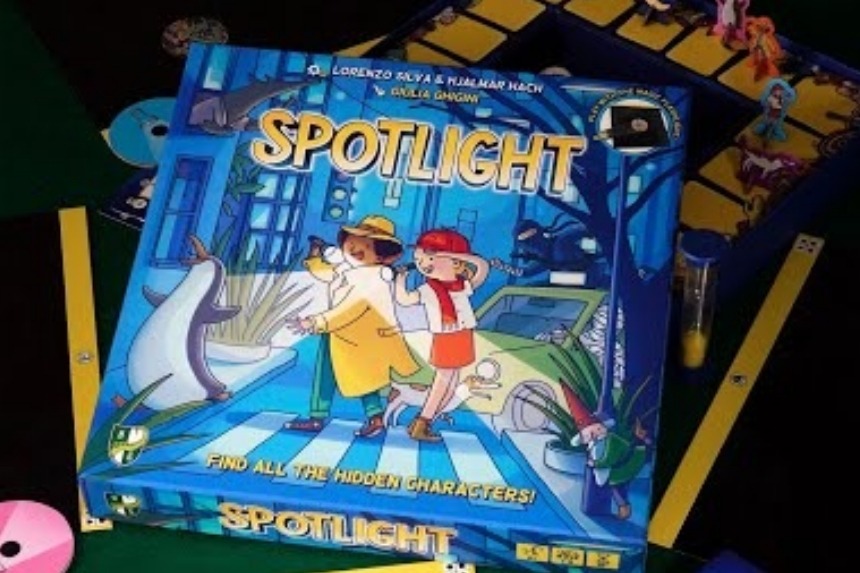
Features: Spotlight is a cooperative hidden object game in which players shine their flashlights on a dark scene to spot wacky characters and objects. The more hidden objects spotted, the further players can move their pawn along the track to reach the finish line first, while being chased by the Moon pawn.
Each player has their own board with a transparent layer that covers part of a scene against a black background. At the beginning of each round, one of the hidden picture cards is drawn to see what to search for. Players turn on their flashlights one after the other to light up objects until the sand timer runs out and then indicate how many they found.
The pawns then move forward based on success. But if the Moon catches the players, then the players use rush tokens. Awards & honors include 2025 As d’Or – Jeu de l’Année Enfant Nominee
Zingo!
| Specifications | |
| Players | 2 – 8 |
| Type | Children’s |
| Age | 4+ |
| Playing Time | 5 Minutes |
| Mechanism | Patern Recognition |
| Complexity | Light |
| Ratings | 4.8 |
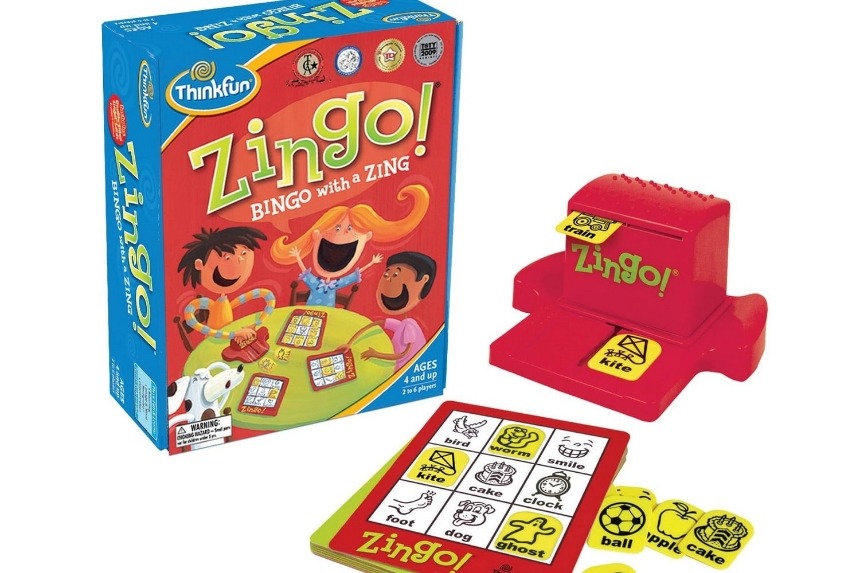
Features: Zingo is a children’s board game where players have to match tiles to be the first to cover all spaces on the card. The cards are double-sided, wherein the green side is for easier play and the red side is more challenging. On a turn, the Zingo tile holder dispenses two tiles that have a picture on them such as apples, balls, fish, stars, houses, kites, trees, trains, among others.
Players place tiles over the spaces matching those on their card. Tiles that are not grabbed go back into the holder. When two different players call the same tile, it goes to whomever called first. Whoever covers all nine spaces first says Zingo to win. Variants include Mini-Zingo and Zany Zingo, which introduce new ways of matching tiles.
